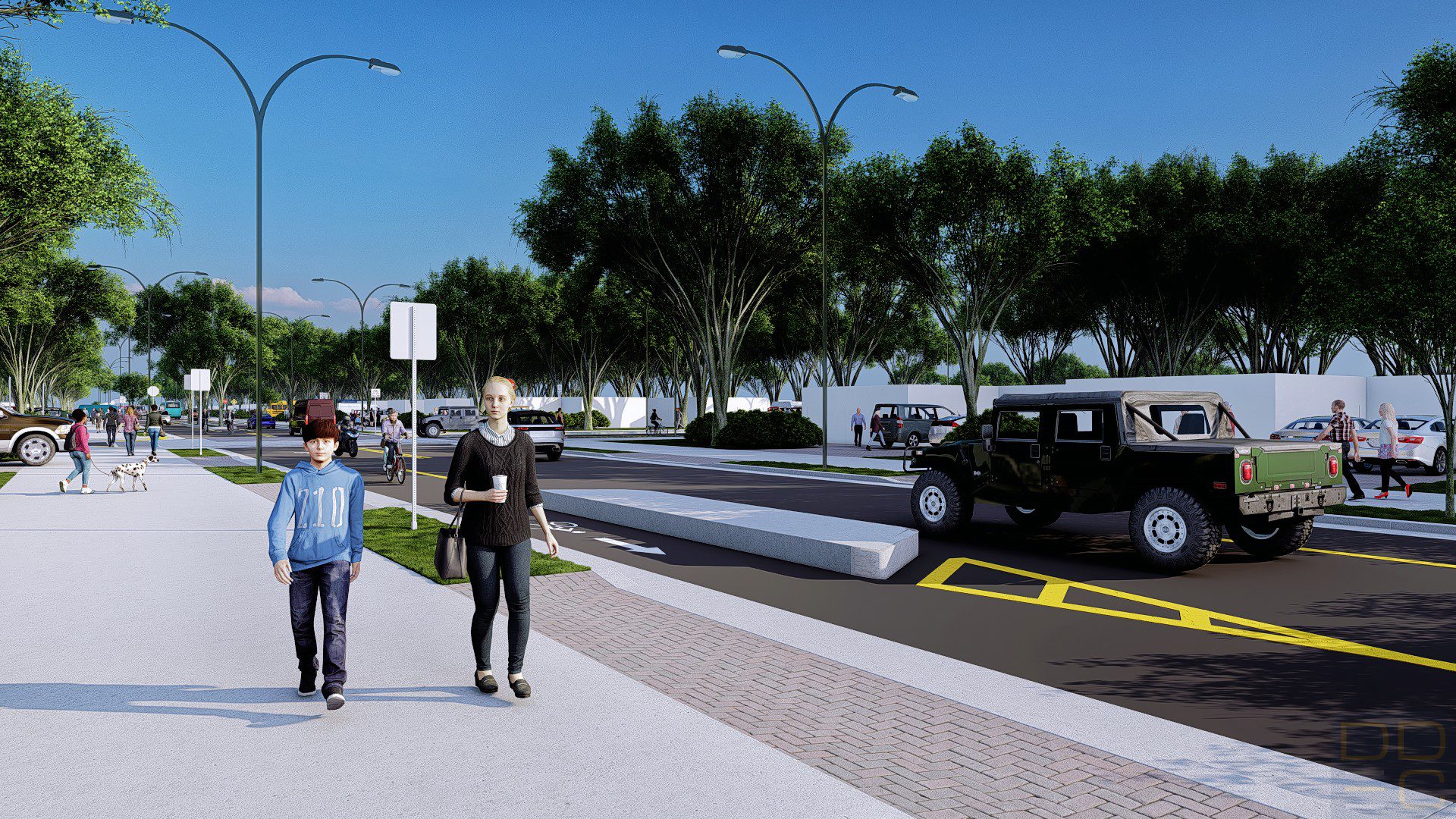

Traffic calming is the use of physical design strategies that slow vehicles and make streets safer for everyone. Unlike stop signs or speed limit signs, which rely on driver behavior, traffic calming changes the street itself so drivers naturally reduce their speed.
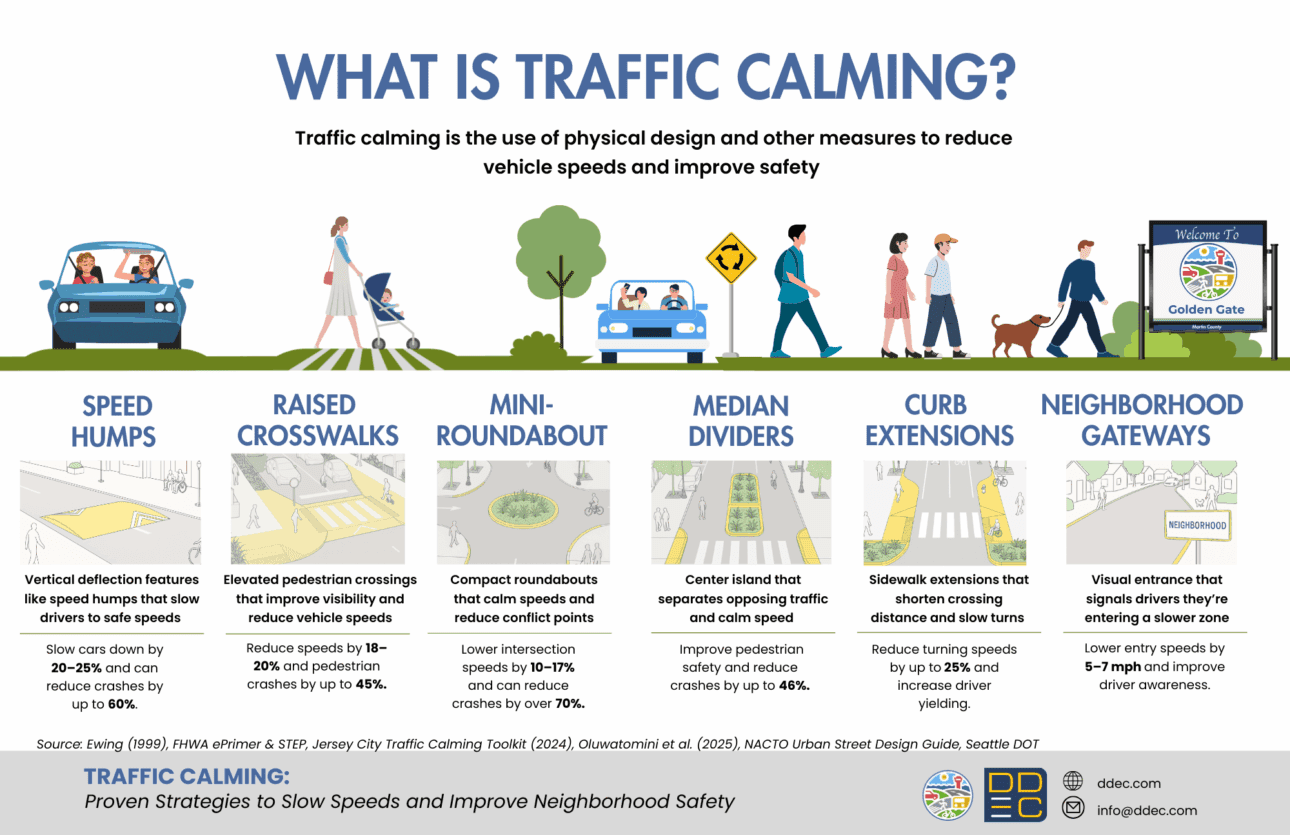
Common tools include:
- Speed humps & raised crosswalks – slow cars by up to 25% and cut crashes nearly in half.
- Mini-roundabouts & median dividers – reduce conflict points and improve pedestrian safety.
- Curb extensions & neighborhood gateways – shorten crossing distances and signal that drivers are entering a slower, safer zone.
Why does this work? Because design influences behavior. When treatments are placed every 300–500 feet, they maintain consistently safe speeds. Signs alone don’t do that.
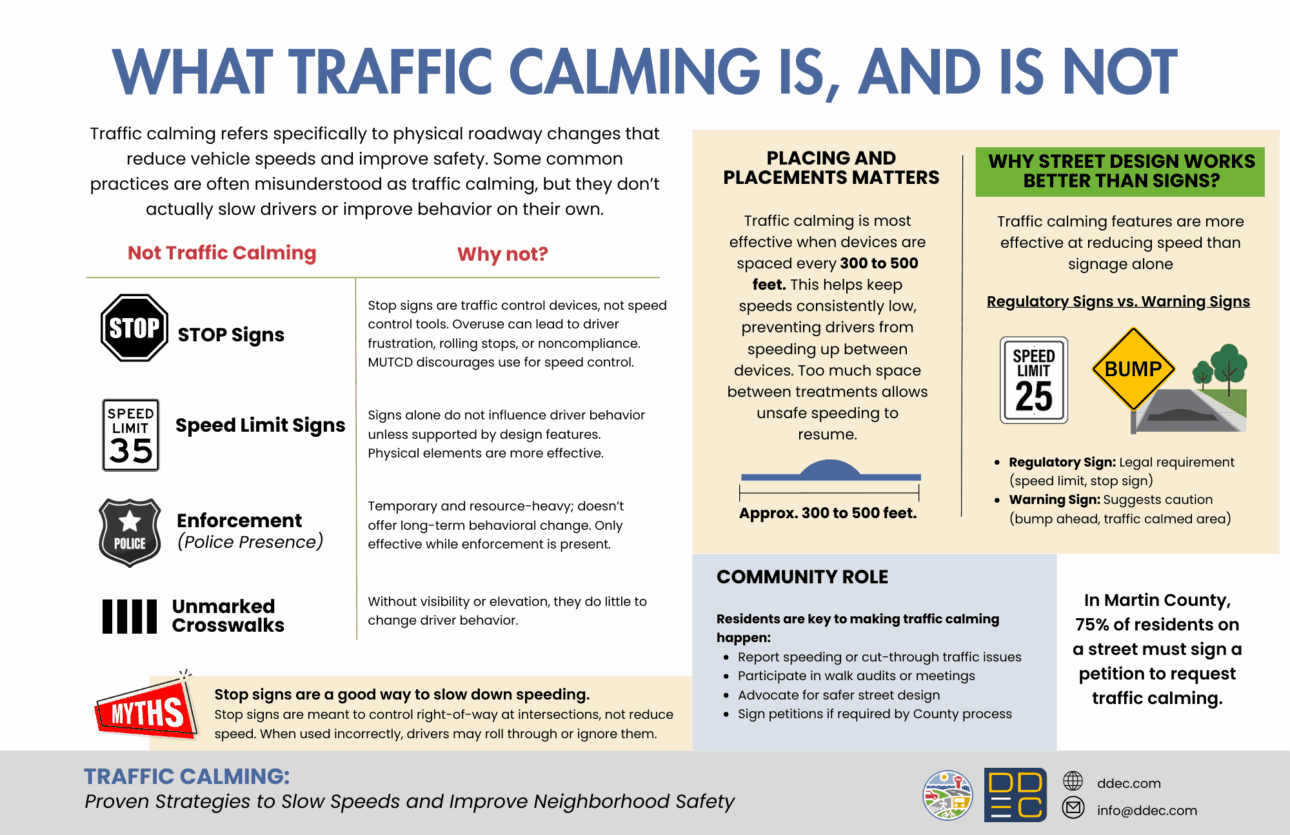
Community support is essential. In Martin County, for example, 75% of residents on a street must sign a petition to request traffic calming. By working together, residents and engineers can create safer, calmer, and more walkable neighborhoods.